
Ladakh Bike Trip from Bangalore: Complete Guide to the Ultimate Road Adventure
Most riders make the same mistake — they read five blogs, pack their panniers, and assume the trip from Bangalore to Ladakh is just a longer version of Leh-Manali. It isn’t. The real challenge isn’t altitude or distance. It’s how you structure the journey before you ever start the engine.
Over the years, we’ve helped dozens of Bangalore riders plan their Ladakh bike trip from Bangalore, and the ones who had the best experience didn’t ride the fastest. They didn’t carry the lightest load. They simply built a plan that respected the terrain, the bike, and their own bodies. That’s what this guide walks you through — not generic mountain riding tips, but the actual choices that separate a smooth adventure from a painful slog.
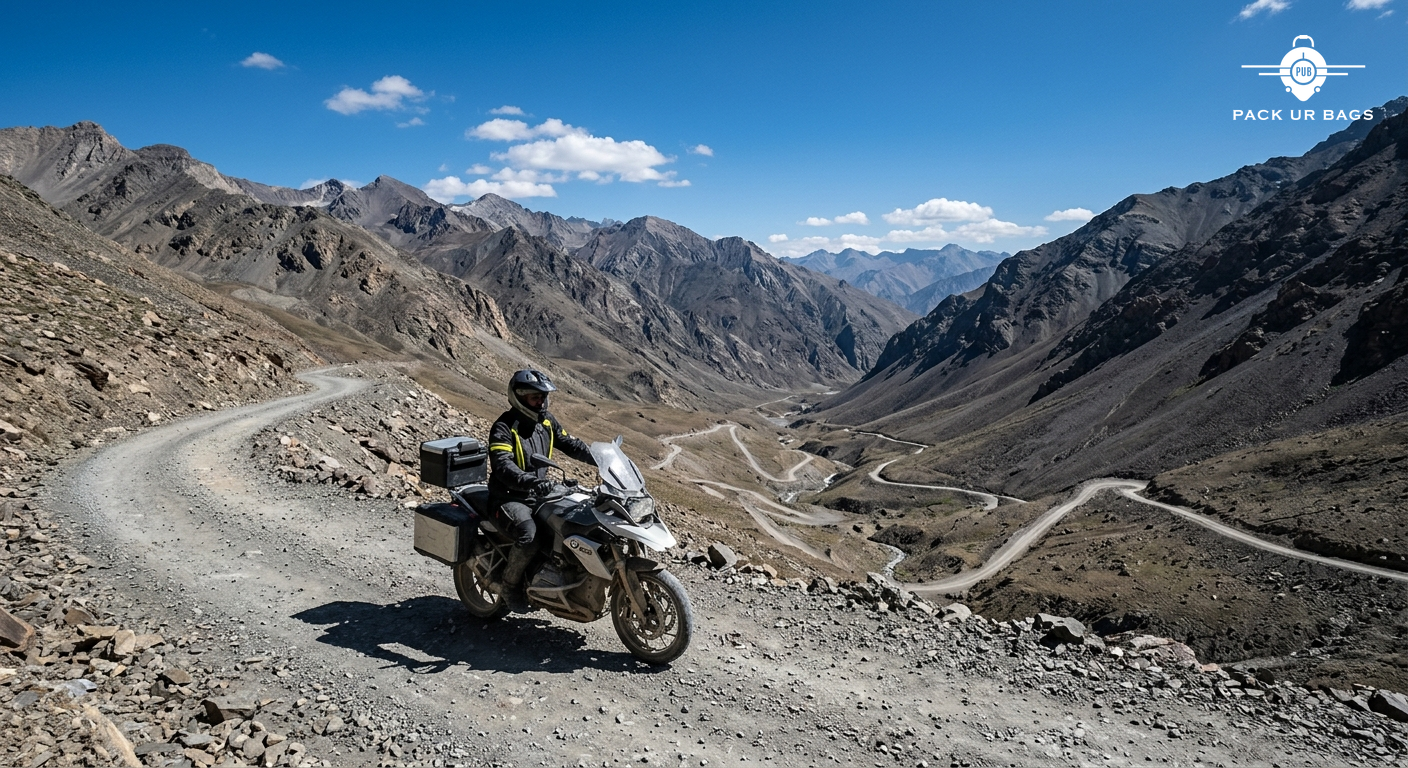
Why a Ladakh Bike Trip from Bangalore Is Different from Every Other Route
Here’s the thing: starting from Bangalore adds roughly 3,000 kilometres to the total journey, most of it through unpredictable terrain before you even see the first snow-capped peak. This isn’t Delhi-Manali, where half the road is highway and the mountains start predictably. You’re riding through Karnataka heat, Maharashtra expressways, Rajasthan’s dry stretches, and Delhi’s chaos — all before Ladakh even begins.
We’ve seen riders burn out before Chandigarh because they treated the first 2,000 kilometres like a warm-up. They pushed 500-plus kilometres daily, showed up in Manali exhausted, and then wondered why high-altitude riding felt brutal. The lesson isn’t complicated: Bangalore to Ladakh is two trips in one. The first leg tests your endurance and bike prep. The second tests your lungs and decision-making.
If you’re riding from Bangalore, you need to plan acclimatisation not just in Leh, but in your pre-Leh schedule. That means overnight halts in mid-altitude towns, not racing from Chandigarh to Manali in a single shot.
The Best Route Options: Manali, Srinagar, or the Mixed Circuit
There are three realistic routes for a Ladakh motorcycle ride starting from Bangalore, and your choice depends more on timing and stamina than romance.
Route 1: Bangalore – Manali – Leh (via Rohtang and Baralacha La)
This is the most popular route, and for good reason. The Manali-Leh highway opens around late May and stays rideable through September. You hit altitude fast — Rohtang Pass sits at 3,978 metres, and you cross it within a day of leaving Manali. It’s thrilling, but it’s also unforgiving if you’re not acclimatised.
The full route looks like this: Bangalore to Pune (850 km), Pune to Udaipur (750 km), Udaipur to Chandigarh (850 km), Chandigarh to Manali (310 km), Manali to Jispa (140 km), Jispa to Leh (340 km). That’s roughly 3,240 kilometres one way, and you’ll want at least 10 to 12 days just to reach Leh comfortably. The return can follow the same route or loop through Srinagar.
Route 2: Bangalore – Srinagar – Leh (via Zoji La)
Longer on paper but easier on the body. Srinagar sits at a much lower altitude than Manali, which means you can recover properly before tackling Zoji La and Drass. The downside? Zoji La opens later, usually mid-June, and weather closures are common even in peak season.
This route adds another 200 to 300 kilometres but spreads the altitude gain more gradually. If you have the time and want a less jarring ascent, this is the smarter choice.
Route 3: The Circuit (Manali In, Srinagar Out or Vice Versa)
This is what most experienced riders do. Go up via Manali, spend a week or more in Ladakh, and return via Srinagar. It avoids backtracking, shows you two completely different landscapes, and gives your body more time to adjust. The only catch: it’s longer and needs tighter planning around road opening dates.
At Pack Ur Bags, we usually recommend the circuit route for riders doing their first Ladakh road trip guide — not because it’s easier, but because it reduces monotony and gives you better stories to bring home.
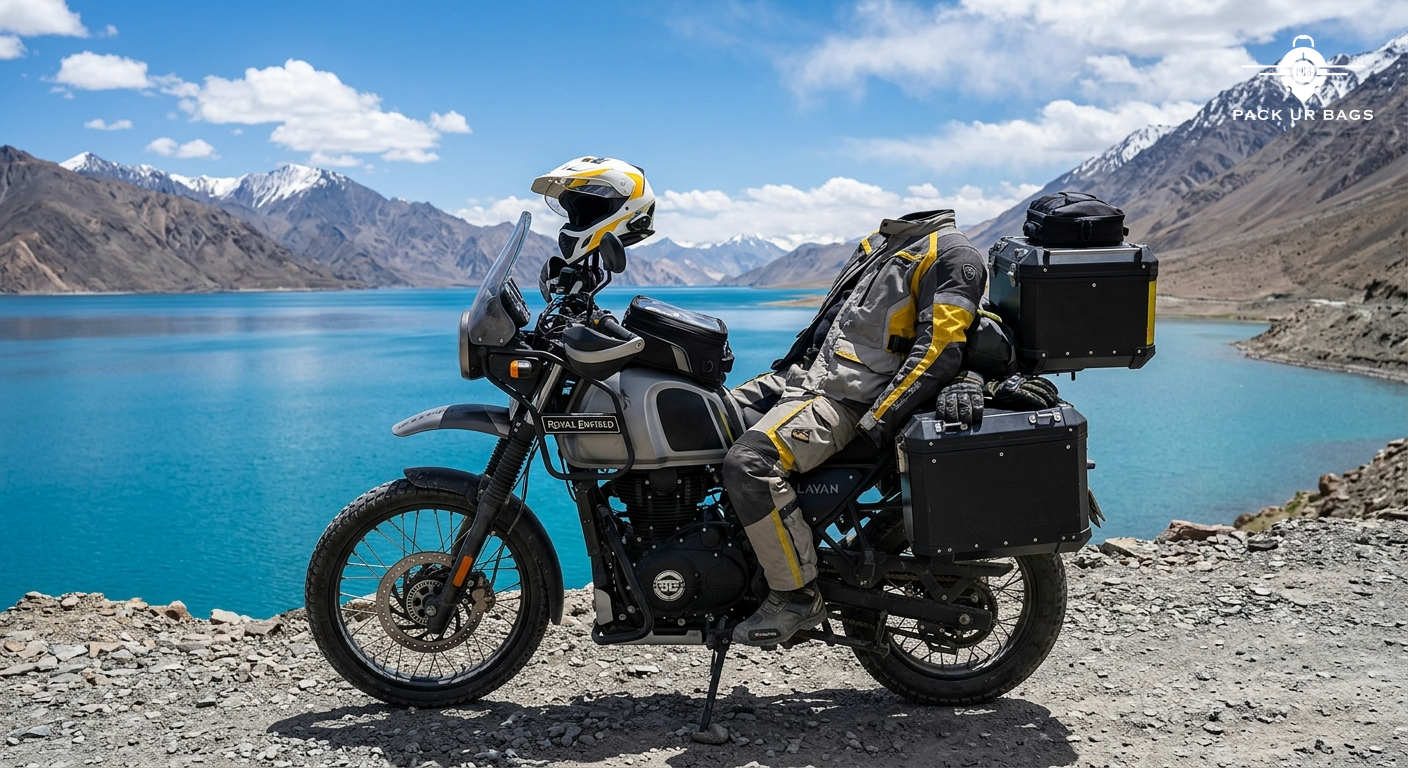
What Bike Works Best for a Bangalore to Ladakh Route
Most people obsess over Royal Enfield versus adventure tourers. That debate misses the point. The question isn’t which bike is cooler. It’s which bike you already trust.
If you’ve ridden your 350cc Classic for 20,000 kilometres around Bangalore and know its quirks, don’t swap it for a rented Himalayan two weeks before departure. Comfort and familiarity beat specs every time. That said, if you’re starting from scratch, here’s what actually matters.
Engine size: Anything 300cc or above handles Ladakh fine. You don’t need 650cc unless you’re carrying a pillion and heavy luggage. The tough sections — Baralacha La, Tanglang La, Khardung La — aren’t about power. They’re about torque and rider patience.
Ground clearance: Crucial. Ladakh’s roads include water crossings, broken tarmac, and gravel stretches where a low-slung sports tourer will scrape. Aim for at least 180mm.
Fuel range: Petrol pumps exist in Leh, Keylong, Kargil, and Diskit, but not much in between. If your bike gives 30 km per litre, you’re fine. If it’s closer to 20, carry a spare fuel canister.
Service network: This is where Royal Enfield still wins. You’ll find a mechanic who knows Bullets in every mountain town. If you ride a KTM or a Benelli, bring your own spares — brake pads, clutch cable, chain links, spark plugs.
One pattern we’ve noticed: riders on lighter bikes (under 200 kg) handle long days better. The bike might struggle slightly on steep climbs, but the rider stays fresh. On a loaded 250-kg adventure tourer, fatigue sets in faster.
Packing Smart: What to Carry and What to Leave Behind
You don’t need five jackets. You don’t need three pairs of riding pants. Pack for function, not Instagram.
Start with riding gear: a good full-face helmet, riding jacket with waterproof lining, reinforced gloves, knee guards, and boots that cover your ankles. These aren’t optional. At altitude, a crash at 40 km/h hits like 80. The cold alone will wreck your hands if your gloves aren’t insulated.
Clothing-wise, pack in layers. A thermal base layer, a fleece mid-layer, and your riding jacket will handle most conditions. Add one pair of thermal pants and one pair of regular riding pants. That’s it. You’ll wash and repeat — everyone does.
Don’t over-pack tools. Carry a basic toolkit — screwdrivers, Allen keys, a puncture kit, zip ties, duct tape, and a tyre pressure gauge. Most serious mechanical issues need a proper garage anyway. What you do need: spare clutch and accelerator cables, brake pads, engine oil (1 litre), chain lube, and fuses.
Here’s what riders forget: a good headlamp, a power bank, a first-aid kit with Diamox for altitude sickness, and ORS sachets. Also, carry a rain cover for your luggage. Ladakh is dry, but the ride up from Bangalore isn’t.
One controversial take: skip the GoPro unless you’re truly committed to editing footage. We’ve seen riders haul camera gear for 6,000 kilometres and never open the files. Your phone camera is enough.
The Pre-Trip Bike Service Checklist You Can’t Skip
This is where most breakdowns start — not on a mountain pass, but in a Bangalore garage two weeks before departure.
Get your bike serviced at least 10 days before you leave, not the day before. Ride it for 200 kilometres after the service to catch anything the mechanic missed. New issues show up in the first 100 kilometres, not the last.
Here’s what the service must cover:
Chain and sprockets: Clean, lube, check tension. A loose chain at altitude can snap. A dry chain eats through sprockets.
Brake pads and fluid: Replace pads if they’re under 40 percent. Bleed the brake lines. Mountain braking is constant, and fade is real.
Tyres: Check tread depth and sidewall condition. If your tyres have done over 15,000 kilometres, replace them. Carry a spare tube even if you’re on tubeless.
Engine oil and filter: Fresh oil, always. Use the grade your manual recommends — don’t experiment with thicker oils just because someone on a forum said so.
Clutch: Adjust free play. A slipping clutch on a 12 percent gradient means you’re stuck.
Electrical: Check battery health, test all lights, inspect wiring for loose connections. A dead battery in Keylong is fixable. A short circuit isn’t.
Coolant: Top up if your bike is liquid-cooled. Check hoses for cracks.
One thing we’ve learned coordinating with riders at Pack Ur Bags: if your mechanic says “it’s fine,” ask them to show you. Trust, but verify. This trip will push your bike harder than it’s been pushed all year.
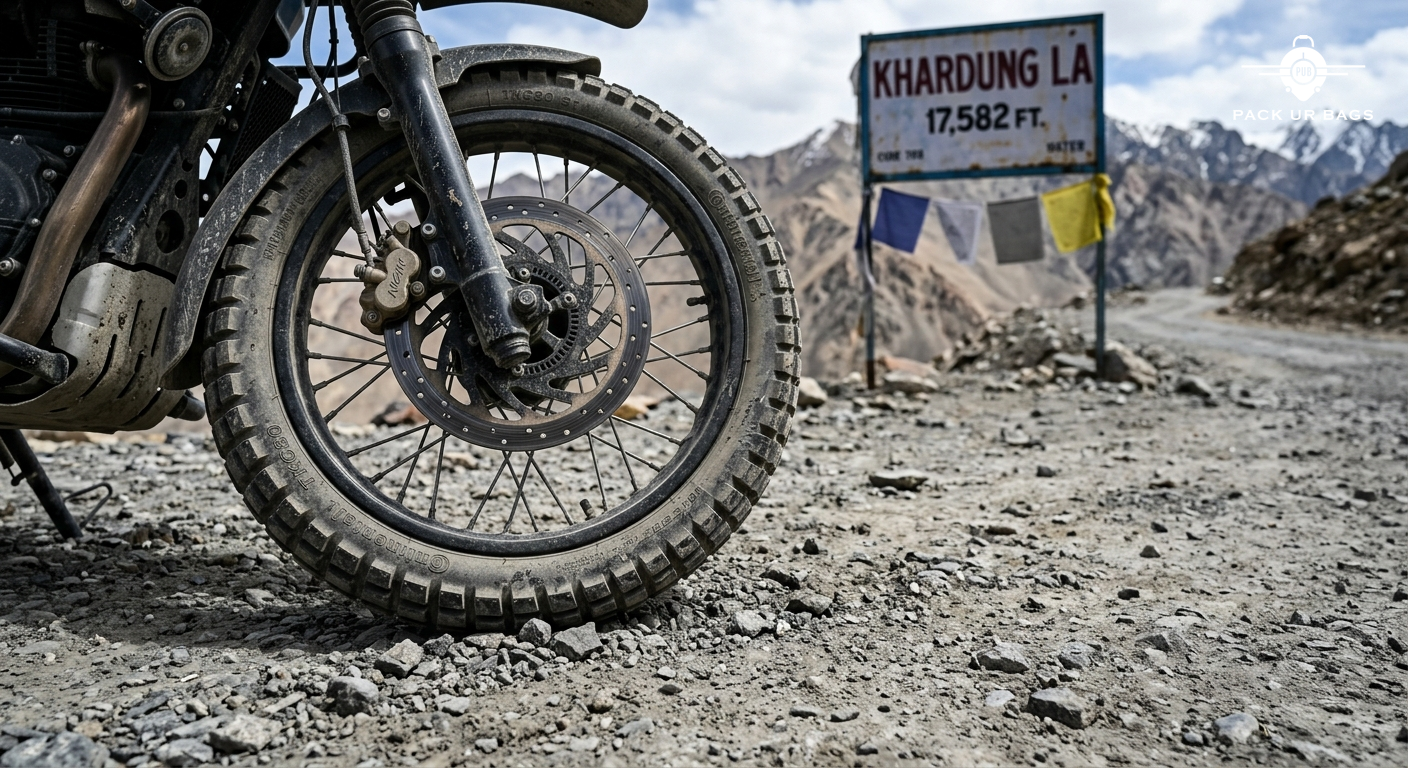
The Day-by-Day Breakdown: Bangalore to Leh in 10 to 12 Days
Here’s a realistic daily split that doesn’t leave you wrecked. This assumes you’re riding solo or with a small group and want to actually enjoy the trip.
Day 1: Bangalore to Pune (850 km)
Long, flat, boring. Start early, take the NH48, stop for breakfast in Hubli. You’ll hit Pune by evening. This day is about getting the highway kilometres behind you.
Day 2: Pune to Udaipur (750 km)
Still highway-heavy but more interesting. The landscape shifts. Stop in Nashik or Dhule for lunch. Udaipur gives you a proper rest before Rajasthan’s dry stretches.
Day 3: Udaipur to Ajmer (280 km)
Short day, intentionally. Rest your body. Walk around Pushkar. Eat well. Sleep early.
Day 4: Ajmer to Chandigarh (650 km)
Back to long riding. Delhi bypass traffic will test your patience. Push through. Chandigarh is your last city halt before the mountains.
Day 5: Chandigarh to Manali (310 km)
Beautiful. The climb starts after Mandi. Take your time. Reach Manali by late afternoon. Rest for a full day here — this is critical.
Day 6: Rest and acclimatisation in Manali
Walk around Old Manali. Eat. Sleep. Let your body adjust. Riders who skip this day regret it at Rohtang.
Day 7: Manali to Jispa (140 km)
Rohtang, Gramphu, Keylong. Altitude hits fast. Jispa sits at 3,200 metres. Sleep early. Watch for headaches.
Day 8: Jispa to Sarchu or Pang (110 to 180 km)
Baralacha La (4,890 m) comes early. Sarchu is safer, Pang is remote but beautiful. Carry extra water. Altitude sickness symptoms peak here.
Day 9: Sarchu/Pang to Leh (250 to 220 km)
Tanglang La (5,328 m) is the big one. Go slow. Don’t race. You’ll roll into Leh by evening. Rest for two full days before any sightseeing.
Day 10: Rest in Leh
Day 11: Rest or explore Leh town
Day 12 onwards: Ladakh exploration (Nubra, Pangong, Tso Moriri)
This schedule gives you buffer days. If weather closes a pass, you’re not scrambling. If you feel altitude sickness, you can rest without ruining the trip.
The Hidden Costs Most Riders Don’t Budget For
Everyone budgets fuel. Hardly anyone budgets the rest.
Fuel: Expect to spend ₹12,000 to ₹15,000 on petrol for the entire round trip, depending on your bike’s mileage. Fuel prices in Ladakh are slightly higher, but not dramatically so.
Permits: Inner Line Permits for Nubra, Pangong, and Tso Moriri cost ₹400 to ₹500 and are mandatory. You can get them in Leh.
Accommodation: Budget hotels in Manali, Jispa, and Leh run ₹800 to ₹1,500 per night. Camps in Sarchu and Pangong cost ₹1,000 to ₹2,000. Book ahead during peak season.
Food: ₹300 to ₹500 per day covers meals. Leh has better options than the highway towns.
Bike repairs: Carry ₹5,000 as buffer. A tyre change in Keylong costs more than in Bangalore.
Emergency fund: Keep ₹10,000 liquid for breakdowns, medical issues, or weather delays.
At Pack Ur Bags, we help riders build realistic budgets before departure. The biggest surprise isn’t the big expenses — it’s the ₹200 here and ₹300 there that add up to ₹10,000 by the end.
Altitude Sickness: What It Feels Like and How to Handle It
This is the part most guides sugarcoat. Altitude sickness is real, common, and miserable if you ignore it.
Symptoms start subtly: a dull headache, mild nausea, trouble sleeping, loss of appetite. Then they escalate: throbbing headache, vomiting, dizziness, confusion. At its worst, it becomes HACE or HAPE — life-threatening conditions that need immediate descent.
Here’s what works:
Climb slowly: Don’t jump from Bangalore (900 m) to Rohtang (3,978 m) in four days. Add buffer stops in Manali and Jispa.
Stay hydrated: Drink 3 to 4 litres of water daily, even if you’re not thirsty. Dehydration worsens symptoms.
Carry Diamox: Take 125 mg twice daily starting two days before you hit altitude. It helps your body acclimatise faster. Consult a doctor before you leave.
Rest when symptoms hit: If your head hurts in Jispa, don’t push to Sarchu. Rest a day. Altitude sickness doesn’t improve with willpower.
Descend if it worsens: If symptoms don’t improve with rest, go down. Seriously. We’ve seen riders hospitalised in Leh because they ignored their bodies.
One rider we worked with at Pack Ur Bags felt fine till Tanglang La, then collapsed with a severe headache in Leh. He’d skipped the rest day in Manali and pushed 500 kilometres daily from Chandigarh. The trip ended there. Don’t be that rider.
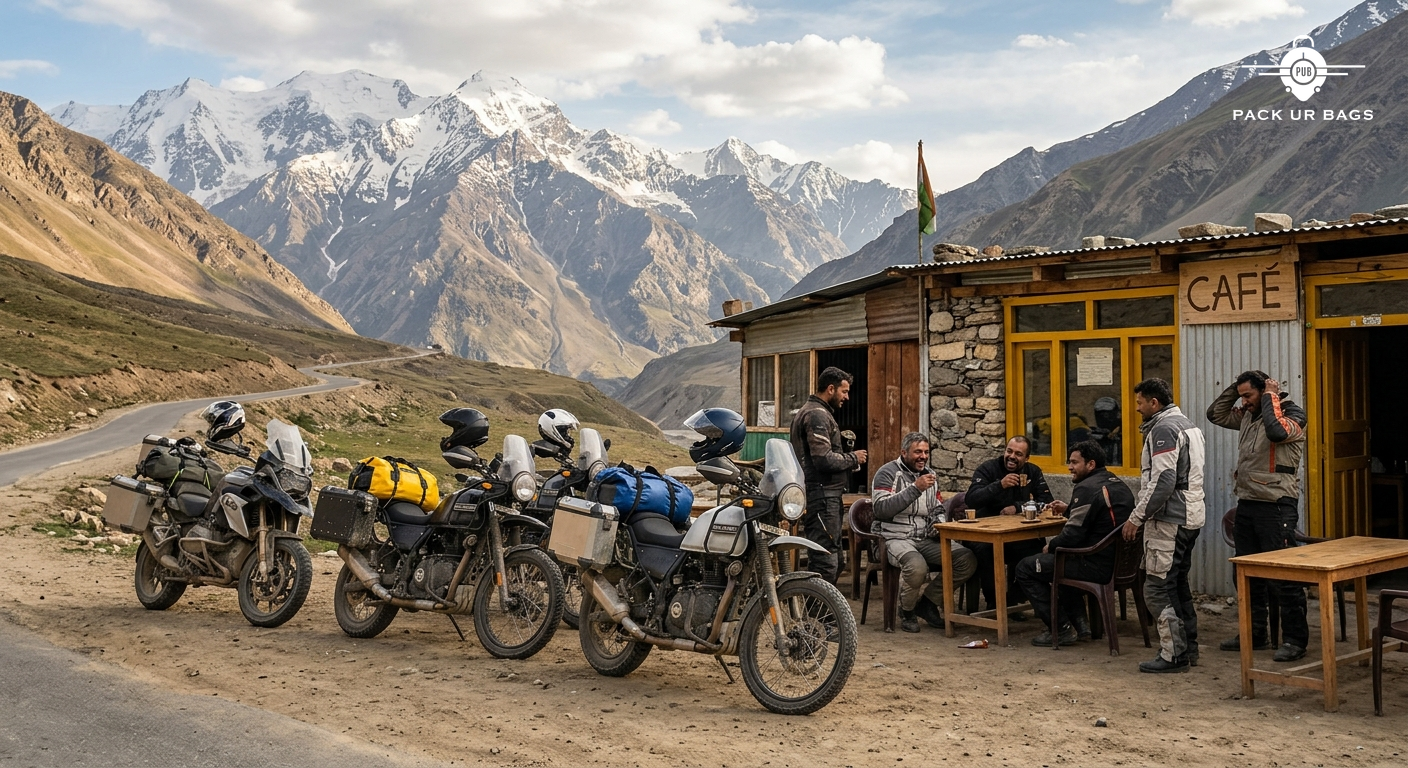
The Best Time for a Ladakh Motorcycle Ride from Bangalore
June to September. That’s it. Outside this window, you’re gambling.
June: Roads just opened, fewer tourists, some snow still visible. Risk: weather can be unpredictable, passes might close without warning.
July to August: Peak season. Roads are clear, temperatures are bearable, but Leh gets crowded and accommodation prices spike. Also, it’s monsoon season in the lowlands, so your ride from Bangalore to Chandigarh will be wet.
September: Best weather in Ladakh, fewer crowds, stunning post-monsoon clarity. Risk: roads start closing by late September, especially Rohtang and Zoji La. If you’re delayed, you might get stuck.
We usually recommend mid-June or early September for Bangalore riders. You avoid the worst of the crowds, prices are slightly lower, and weather is stable enough.
What Makes Pack Ur Bags the Right Partner for Your Ladakh Bike Trip
Planning a Ladakh road trip guide from scratch is overwhelming — route maps, permits, accommodation bookings, backup plans for weather closures, emergency contacts, bike service coordination. Most riders spend weeks researching and still miss critical details.
That’s where Pack Ur Bags steps in. We’ve helped Bangalore-based riders plan adventure biking Ladakh trips for years, and the value isn’t just logistics. It’s the small things you wouldn’t think of: which garage in Chandigarh services your bike model, which guesthouse in Jispa has a mechanic next door, what to do if Rohtang closes the day you’re supposed to cross.
We customise every itinerary based on your riding experience, bike type, fitness level, and budget. Whether you want a fully supported trip with a backup vehicle or a minimalist solo plan with emergency contacts, we build it around what works for you — not a template.
Call us at +91-9150017657 or visit our office in Sarjapur, Bangalore. Let’s plan your Ladakh bike trip from Bangalore the right way — no stress, no guesswork, just a clear plan that gets you to Leh and back in one piece.
Frequently Asked Questions
How many days do I need for a Ladakh bike trip from Bangalore?
Minimum 18 days for a comfortable round trip — 10 to 12 days to reach Leh, 4 to 5 days exploring Ladakh, and 10 to 12 days back. If you’re rushing, 15 days is possible but exhausting. Add buffer days for weather delays and rest.
What is the total cost of a Bangalore to Ladakh bike trip?
Expect ₹40,000 to ₹60,000 per person including fuel, accommodation, food, permits, and bike maintenance. This assumes mid-range stays and moderate daily spending. Luxury adds another ₹20,000 to ₹30,000.
Can I do a Ladakh motorcycle ride on a 150cc bike?
Technically yes, but it’ll be slow and uncomfortable. Anything under 200cc struggles on steep climbs and high-altitude oxygen-thin air. If that’s your only option, go slow, pack light, and prepare for longer days.
Is it safe to ride solo from Bangalore to Ladakh?
Safer than most people think, but not recommended for first-timers. Roads are well-travelled during peak season, help is usually available, and mobile networks work in most towns. That said, riding with at least one companion is smarter — mechanical failures and altitude sickness are easier to handle with support.