

International Travel Guide for First-Time Travelers
Your first international trip should feel exciting, not overwhelming. But here’s what we see at Pack Ur Bags every single week — Bangalore travelers who’ve booked their flights but have no idea what comes next. The passport application sits half-finished. The visa requirements look like a foreign language. The budget spreadsheet has more question marks than numbers.
We’ve walked hundreds of first-time travelers through this exact process from our office on Sarjapur-Attibele Road. Some sailed through. Others hit roadblocks we should’ve warned them about earlier. This guide is everything we wish every first-time traveler knew before they walked through our door.
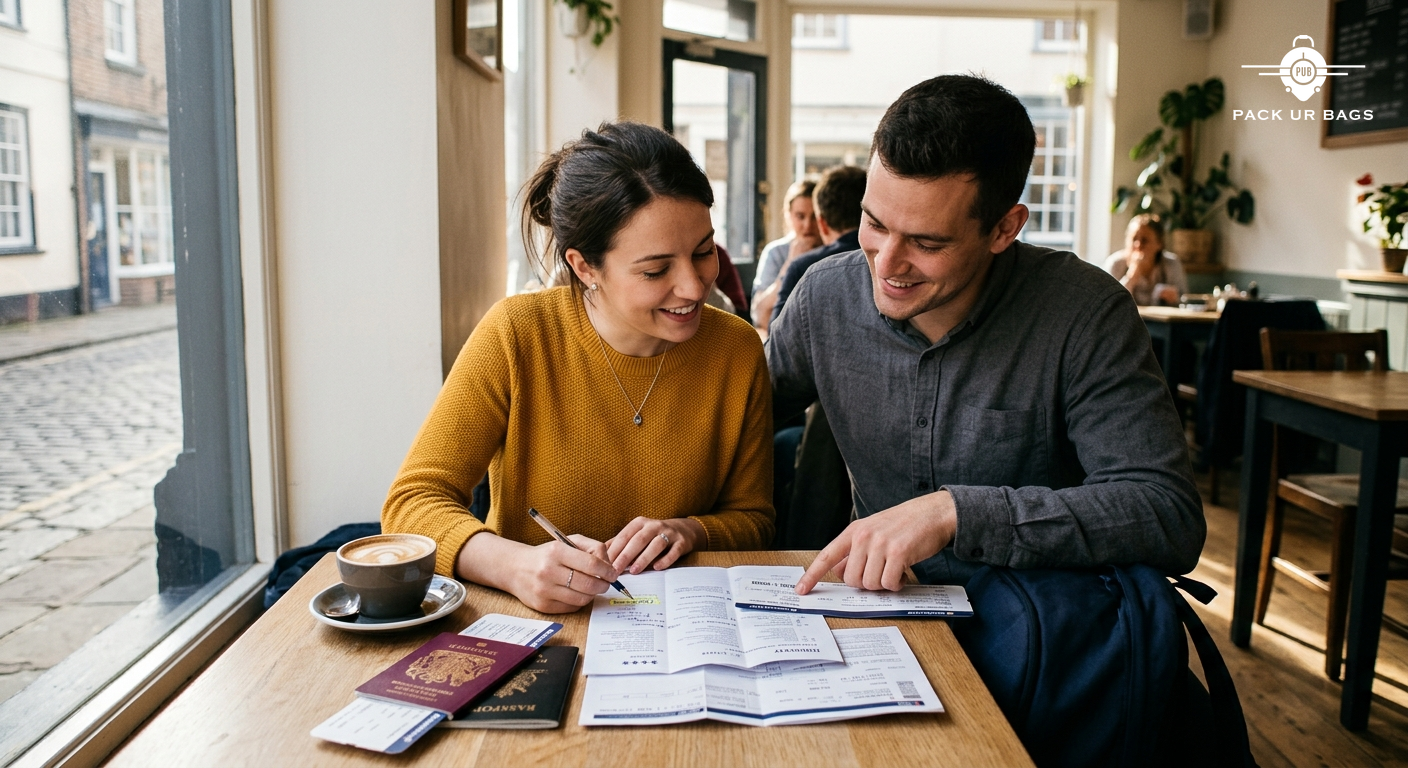
Why First-Time International Travel Feels Harder Than It Actually Is
Most stress comes from not knowing the sequence. You’re Googling ten things at once — visas, insurance, currency, packing lists — when really, there’s a clear order that makes everything easier.
Here’s what usually happens: Someone books a Thailand package because the flight sale looked good. Then they realize their passport expired two years ago. Or they apply for a visa without the right bank statements. Or they land in Bali and their debit card doesn’t work because they forgot to inform their bank.
These aren’t worst-case scenarios. They’re Tuesday.
The good news? Every single one of these problems is avoidable if you follow the right sequence. That’s what this international travel guide for first-time travelers is built around — the actual order things need to happen.
Step 1: Check Your Passport Validity (Do This Before Anything Else)
Start here. Always.
Most countries require your passport to be valid for at least six months beyond your return date. Thailand, Maldives, Dubai, Singapore — they all have this rule. If your passport expires in four months and you’re planning a trip in two months, you’re getting turned away at immigration.
We had a Bangalore couple ready to fly to Phuket last year. Everything was booked. Three days before departure, we discovered his passport expired in five months. Thai immigration wouldn’t accept it. We had to cancel the entire trip.
Here’s your checklist:
- Find your passport right now
- Check the expiration date
- Count six months from your planned return date
- If your passport expires before that, apply for renewal immediately
Passport renewal in India takes two to four weeks if you apply through the Passport Seva Kendra in Bangalore. Don’t trust the “urgent” timelines — they’re unreliable. Give yourself at least eight weeks before your travel date.
If you don’t have a passport at all, the process takes about three to six weeks from application to delivery. Book your trip only after you have the passport in hand, not before.
Step 2: Understand Visa Requirements for Your Destination
This is where Bangalore residents travel tips get specific, because visa rules change based on your nationality and destination.
Some countries offer visa-on-arrival for Indian passport holders. Others require you to apply weeks in advance. A few offer e-visas you can get in 48 hours. And some won’t let you in without an invitation letter or hotel booking.
Here’s what we tell every first-time traveler we work with:
Thailand offers visa-on-arrival, but only for stays up to 15 days, and you’ll stand in a long queue at Bangkok airport. The better option? Apply for an e-visa before you leave — it’s valid for 60 days and costs about the same.
Maldives gives you a free 30-day visa when you land, as long as you have a return ticket and hotel confirmation.
Dubai (UAE) offers a 14-day or 30-day tourist visa. Most Indian travelers apply through their airline or a travel agency. Processing takes three to five working days.
Bali (Indonesia) offers visa-on-arrival for 30 days. You pay at the airport. Easy.
Singapore requires an e-visa applied for in advance. Processing takes three to five days. You need bank statements, travel insurance, and a confirmed itinerary.
Europe (Schengen visa) is the most complex. You need to apply through the embassy of your main destination country. Processing takes 15 to 20 working days, sometimes longer during peak season. You’ll need travel insurance that covers at least €30,000, confirmed hotel bookings, flight reservations, and three months of bank statements.
Here’s the mistake first-timers make: they assume every visa process is the same. It’s not. Some embassies want original documents. Others accept scanned copies. Some require in-person appointments. Others let you apply online.
Do not assume. Check the official embassy website or consulate page for your specific destination. Or work with someone who processes these daily.
Step 3: Plan Your Travel Budget (And Add 20% More Than You Think You Need)
Travel budget planning is where reality hits.
You’ve seen the Instagram photos. You’ve checked flight prices. You think you know what the trip will cost. Then you land, and suddenly everything costs more than you expected — airport transfers, meals, entry tickets, that spontaneous boat tour everyone’s doing.
Here’s how we break down costs for Bangalore travelers:
Flights: Book three to four months in advance for the best prices. Bangalore to Thailand usually runs ₹20,000 to ₹35,000 return. Bangalore to Dubai is ₹15,000 to ₹25,000. Europe is ₹40,000 to ₹70,000 depending on season.
Accommodation: Budget ₹2,000 to ₹4,000 per night for decent mid-range hotels in most Asian destinations. Europe costs more — expect ₹5,000 to ₹8,000 per night.
Food: Budget ₹1,500 to ₹2,500 per person per day if you’re eating at mid-range restaurants. Street food and local joints will cost less. Tourist-trap restaurants will cost double.
Activities and sightseeing: Budget ₹5,000 to ₹10,000 per person for a week-long trip. Island-hopping tours, temple entries, adventure activities, guided tours — they add up fast.
Local transport: Depending on the destination, budget ₹500 to ₹1,500 per day for taxis, metro, or rented scooters.
Travel insurance: ₹500 to ₹1,500 per person for a week-long trip. Non-negotiable.
Miscellaneous and shopping: Whatever you think you’ll spend, double it.
One thing we’ve learned working with first-time travelers: everyone underestimates. Your ₹80,000 trip will actually cost ₹95,000. Plan for it upfront, and you won’t stress halfway through your vacation when your account balance looks lower than expected.
Step 4: Buy Travel Insurance (Seriously, Don’t Skip This)
Travel insurance and documents are boring until you actually need them. Then they’re everything.
We had a family traveling to Singapore two years ago. Their daughter fell sick on day three — high fever, hospital visit, overnight observation. The bill came to ₹1,20,000. They had travel insurance. They paid nothing out of pocket.
Without insurance, that’s a financial disaster that ruins the trip and the months after it.
Here’s what good travel insurance covers:
- Medical emergencies abroad (hospitalization, doctor visits, medicines)
- Trip cancellations or delays (if your flight gets canceled or you miss a connection)
- Lost or delayed baggage (if the airline loses your suitcase)
- Passport loss or theft
- Emergency evacuation (if you need to be flown back to India for medical reasons)
Most policies cost ₹500 to ₹1,500 per person for a week-long international trip. Companies like ICICI Lombard, HDFC Ergo, Bajaj Allianz, and Tata AIG offer solid options.
Read the fine print. Some policies don’t cover adventure activities like scuba diving or paragliding. Others have a cap on medical coverage that’s too low for destinations like the US or Europe. Make sure your policy covers at least $50,000 in medical expenses if you’re traveling to expensive healthcare destinations.
And keep a copy of your insurance documents on your phone and in your email. You’ll need the policy number and emergency contact number if something goes wrong.
Step 5: Inform Your Bank and Set Up International Transactions
This step takes five minutes and saves you from standing at a foreign ATM with a card that doesn’t work.
Most Indian debit and credit cards are blocked for international transactions by default. You need to enable them before you leave.
Log into your bank’s app or net banking portal. Look for “international usage” or “overseas transactions.” Enable it for the dates of your trip. Some banks ask you to specify which countries you’ll visit.
Call your bank if you can’t find the option online. Tell them your travel dates and destinations. They’ll activate it on their end.
Also ask about foreign transaction fees. Most banks charge 3% to 4% on every international transaction — ATM withdrawals, card payments, everything. Some premium credit cards waive this fee. Know what you’re paying before you leave.
Here’s a tip we give every traveler from Bangalore: carry at least two cards from different banks. If one gets blocked or stops working, you have a backup. We’ve seen people stranded with no access to money because their single card got blocked for “suspicious activity” — which was just them using it abroad.
Step 6: Book Flights and Accommodation in the Right Order
Here’s the order that works:
First, buy your flight tickets. Lock in your travel dates.
Then book your accommodation. Use Booking.com, Agoda, Airbnb, or work with a travel agency like Pack Ur Bags to arrange everything in one go.
Why this order? Because visa applications often require proof of flights and hotels. If you book hotels before confirming your visa, and your visa gets rejected, you’re stuck with non-refundable bookings.
For first-timers, we usually recommend booking at least the first two nights of accommodation before you leave. Once you’re in the destination and comfortable, you can book the rest as you go if you want flexibility. But having that first hotel locked in removes the stress of figuring out where to go the moment you land.
Also: print your hotel confirmation and keep it in your carry-on bag. Some countries ask to see it at immigration.
Step 7: Plan What You’re Packing (Start One Week Before)
Don’t pack the night before your flight. You’ll forget something important.
Start a packing list one week out. Add to it as you think of things. The day before you leave, pack everything on the list.
Here’s what goes in your carry-on bag (the one you take on the flight):
- Passport and visa documents
- Travel insurance printout
- Hotel booking confirmations
- One change of clothes (in case your checked bag gets delayed)
- Phone charger and adapter (India uses 220V, most countries do too, but plug shapes vary)
- Any prescription medicines
- Pen (for filling immigration forms on the plane)
Here’s what goes in your checked bag:
- Clothes for the number of days you’re traveling (don’t overpack — you’ll wear half of what you bring)
- Toiletries in a clear zip-lock bag (liquids in checked bags are fine, but keep them organized)
- Shoes (two pairs max — one for walking, one for nicer dinners)
- A small first-aid kit (band-aids, pain relievers, anti-diarrhea tablets)
- Sunscreen and mosquito repellent
- A reusable water bottle (empty it before security)
What not to pack:
- Expensive jewelry (leave it home)
- Too many gadgets (you don’t need three cameras)
- Full-size bottles of anything (buy travel sizes or refill small bottles)
Check your airline’s baggage rules before you pack. Most international flights allow 15 to 23 kg in checked baggage and 7 kg in carry-on. If you’re over, you’ll pay hefty fees at the airport.
Step 8: Understand Airport Process and Immigration
Your first time through an international airport can feel intimidating. It’s not once you know the sequence.
Here’s what happens:
At Kempegowda International Airport, Bangalore:
- Arrive three hours before your flight (not two — international check-in closes earlier)
- Go to your airline’s counter, show your passport and ticket confirmation, check in your bag
- Collect your boarding pass
- Go through security (laptop and liquids out of your bag, belt and shoes off)
- Find your gate and wait
When you land at your destination:
- Follow signs for “Immigration” or “Passport Control”
- Fill out the arrival card if they give you one on the plane (carry a pen)
- Stand in the queue for “Foreign Nationals” or “Visitors” (not the line for citizens)
- Hand your passport and arrival card to the immigration officer
- Answer their questions honestly — where you’re staying, how long, purpose of visit (say “tourism”)
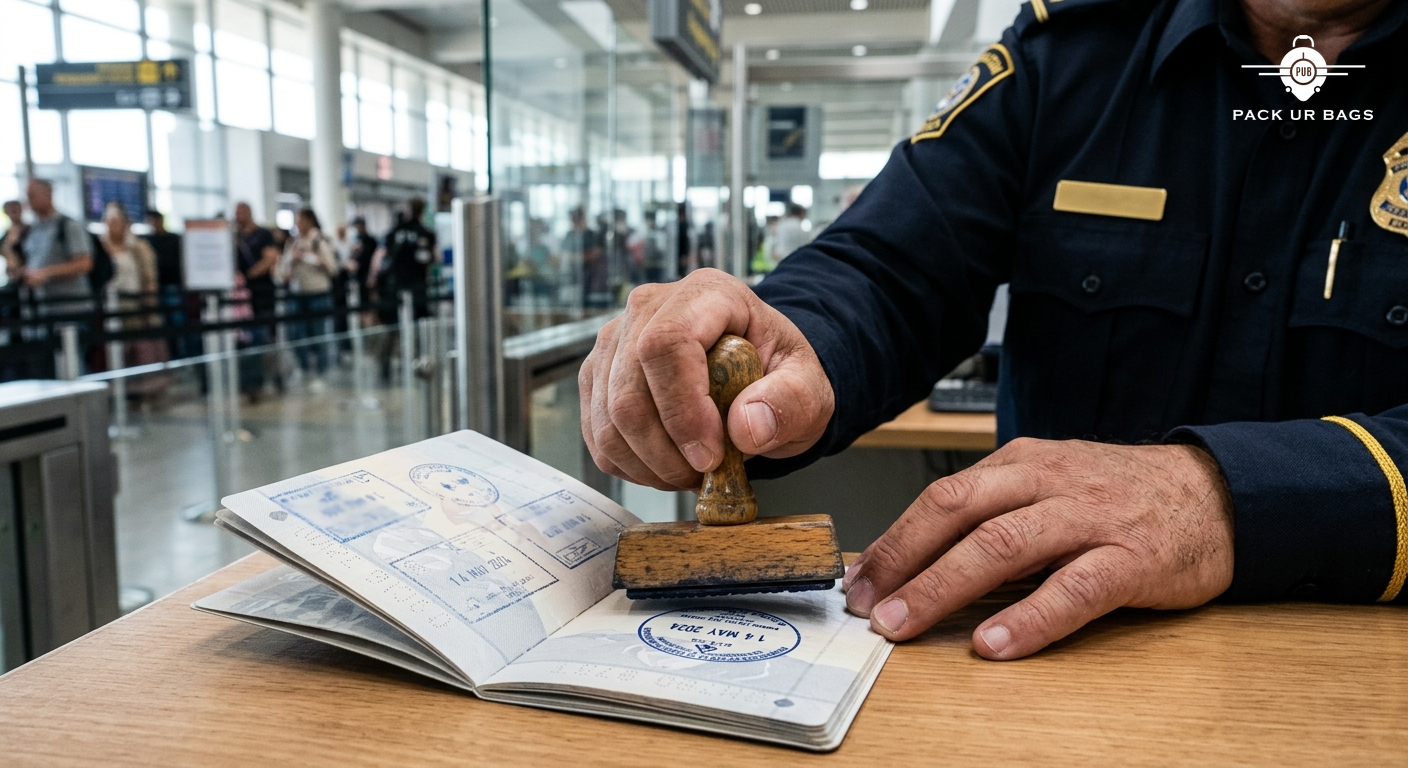
- They’ll stamp your passport and wave you through
- Collect your checked baggage from the carousel
- Go through customs (usually just walk through unless you’re carrying something to declare)
- Exit and find your prearranged transport (or buy a local SIM, withdraw cash, call a cab)
Most first-timers worry about immigration questions. Don’t. The officer just wants to confirm you’re a genuine tourist. Have your hotel booking ready to show if asked. Smile. Be polite. You’ll be through in two minutes.
Step 9: Get Local Currency and a SIM Card (Do This Right After You Land)
Don’t exchange all your currency in India. Airport rates are terrible. Exchange just enough for the first day — cab fare, a meal, tips — maybe ₹2,000 to ₹3,000 worth.
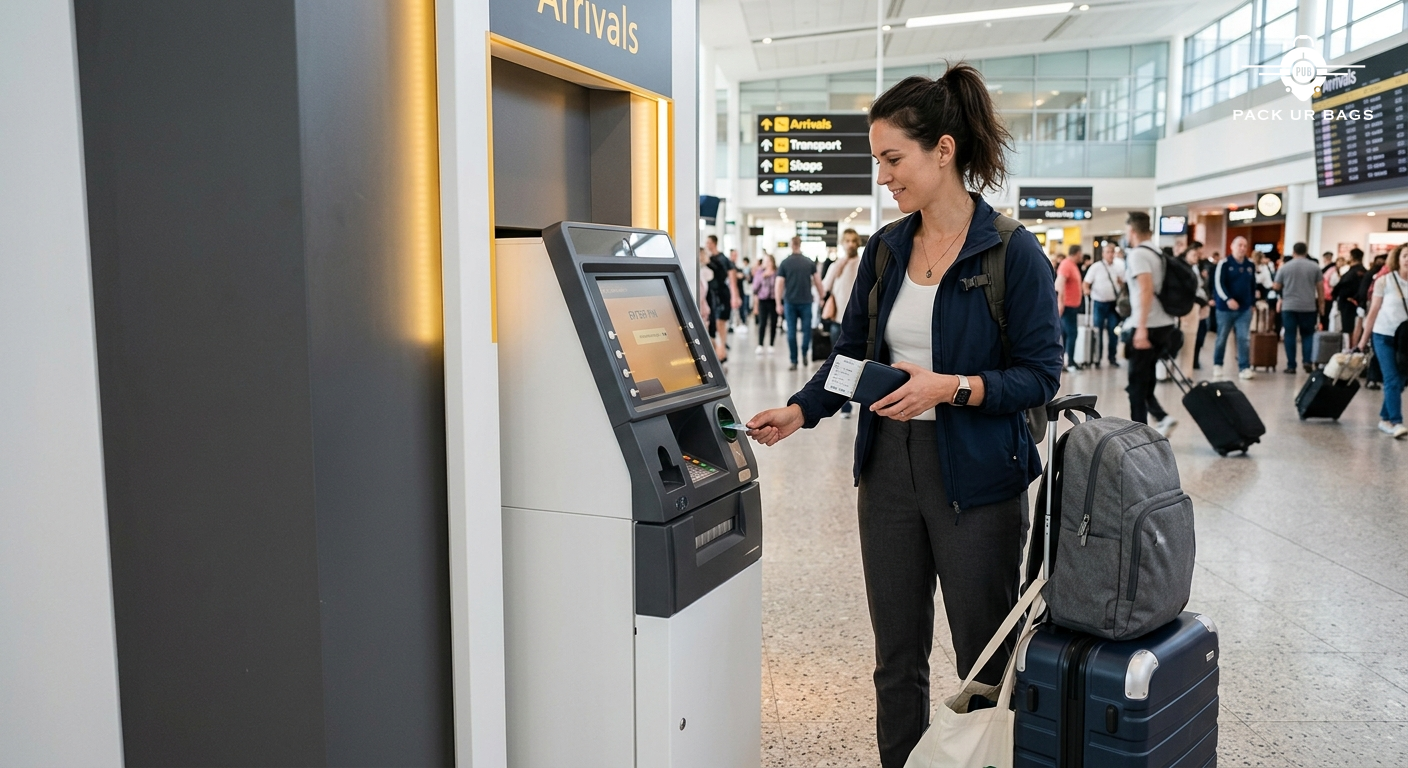
Once you land, withdraw cash from an ATM in the arrival hall. You’ll get better exchange rates than any currency exchange counter. Use your international-enabled debit card. Withdraw the local currency directly (don’t choose the “convert to INR” option the ATM offers — that’s a worse rate).
Next, buy a local SIM card. Most international airports have SIM card kiosks right in the arrival area. A tourist SIM with 5 to 10 GB of data usually costs the equivalent of ₹500 to ₹1,000. You’ll need it for Google Maps, calling hotels, booking cabs, and staying in touch.
Bring a passport-size photo and a photocopy of your passport — some countries require it to activate a SIM. Or just use the photo on your phone and they’ll print it.
If you don’t want to deal with SIM cards, you can activate international roaming on your Indian number before you leave. But it’s expensive — often ₹500 to ₹1,000 per day depending on your telecom provider. A local SIM is cheaper and faster.
What to Expect on Your First International Flight
If you’ve never flown internationally, the flight itself can feel like a big unknown.
Here’s the reality: it’s just a longer version of a domestic flight. You’ll get meals (usually two on a long flight — one after takeoff, one before landing). You’ll get drinks and snacks in between. There’s entertainment — movies, TV shows, games on the screen in front of you. Bring headphones if yours are good; airplane-provided ones are uncomfortable.
Dress comfortably. Layers are smart — planes get cold. Bring a neck pillow if you want to sleep. Move around every couple of hours to avoid stiffness.
The crew will give you an immigration form to fill out before landing. Fill it out on the plane so you don’t have to scramble at immigration. Use the pen you packed in your carry-on.
Mistakes We See First-Time Travelers Make (And How to Avoid Them)
We’ve seen these repeatedly:
Booking a trip before checking passport validity. Always check your passport first. Always.
Not informing the bank about international travel. Your card will get blocked. Guaranteed.
Overpacking. You don’t need seven pairs of shoes. You’ll wear two.
Skipping travel insurance. The one time you need it, you’ll regret not having it.
Not keeping digital and physical copies of important documents. Email yourself scans of your passport, visa, insurance, and hotel bookings. Print copies and keep them in your bag. If your phone dies or gets stolen, you’ll still have access.
Exchanging too much currency in India. You’ll get better rates abroad. Exchange just enough for day one.
Panicking at immigration. They’re not trying to trick you. Answer honestly and you’ll be fine.
Not planning for jet lag. If you’re flying to a destination with a big time difference (like Europe), you’ll be tired for the first two days. Build that into your itinerary. Don’t plan eight hours of sightseeing on day one.
When to Book Your First International Trip
Timing matters more than you think.
If you’re planning a trip to Southeast Asia (Thailand, Bali, Vietnam, Malaysia), the best time to visit is November to March. Weather’s great, and it’s peak season, so book at least two to three months ahead.
For Europe, summer (June to August) is peak season. Book four to six months ahead if you’re going then. Shoulder season (April-May or September-October) has better prices and fewer crowds.
Maldives is year-round, but November to April is dry season. Expect higher prices.
Dubai is best from November to March. Summer is brutally hot.
If you’re traveling during Diwali, Christmas, or New Year, book even earlier. Flights and hotels get expensive and sold out fast.
Should You Book Everything Yourself or Use a Travel Agency?
Here’s the honest answer from someone who runs a travel agency:
If you love planning, have the time to research, and enjoy figuring out logistics, book it yourself. You’ll save a bit of money and have full control.
But if planning stresses you out, or you’re not sure where to start, or you just want someone to handle everything so you can show up and enjoy, work with a travel agency.
At Pack Ur Bags, we see both types. The DIY planners who just need help with visas. And the travelers who want us to handle flights, hotels, transfers, activities, everything — they just want to pack and go.
There’s no wrong choice. The wrong choice is stressing yourself out trying to do something you don’t enjoy, or skipping the trip altogether because planning feels overwhelming.
If you’re a first-time international traveler from Bangalore and the whole process feels like too much, we’re here. Call +91-9150017657, tell us where you want to go and what your budget is, and we’ll build the trip around you. Transparent pricing, no hidden costs, 24/7 support while you’re traveling.
Your First International Trip Should Feel Like an Adventure, Not a Checklist
Yes, there are steps. Documents, visas, budgets, packing lists. But once you’ve done it once, the second trip is ten times easier. You’ll know the airport process. You’ll know what to pack and what to leave home. You’ll know how to handle currency and SIM cards and immigration.
Your first trip is the hardest because it’s new. But it’s also the most memorable because everything is a first. The first time you land in a country where nobody speaks your language. The first time you navigate a foreign subway. The first time you taste a dish you can’t pronounce.
That’s the whole point.
So start with step one. Check your passport. Then move to step two. One thing at a time. Before you know it, you’ll be sitting on a plane, watching Bangalore disappear below you, heading somewhere you’ve never been.
And when you come back, you won’t be a first-time traveler anymore.
Frequently Asked Questions
How much money should I carry for my first international trip?
Carry about ₹5,000 to ₹10,000 worth of local currency in cash for emergencies, and rely on your international-enabled debit or credit card for most expenses. Always have two cards from different banks as backup. Avoid carrying large amounts of cash — it’s risky and unnecessary.
Do I need a visa for every country I visit?
No. Some countries like Maldives and Indonesia offer visa-on-arrival for Indian passport holders. Others like Thailand and Dubai require you to apply in advance. A few European countries need a Schengen visa. Always check the official embassy website for your specific destination at least two months before travel.
What documents do I need to carry while traveling internationally?
You need your passport (valid for at least six months), visa or e-visa confirmation, travel insurance documents, hotel booking confirmations, return flight tickets, and vaccination certificates if required by your destination country. Keep both printed and digital copies of everything.
How early should I reach the airport for an international flight from Bangalore?
Arrive at Kempegowha International Airport at least three hours before your scheduled departure time for international flights. Check-in counters close earlier than domestic flights, and immigration and security can take longer during peak hours.
Ready to Stop Planning and Start Packing?
This is everything we’d tell you if you walked into our office in Sarjapur right now. You’ve got the steps. You know the sequence. You understand what to expect.
If you want to handle it yourself, go ahead. You’ve got this guide. If you’d rather hand the planning off to someone who does this daily, Pack Ur Bags is right here in Bangalore. We’ll customize your entire trip — flights, hotels, visas, activities, everything — based on your budget and preferences. Call us at +91-9150017657 or visit us at J S Complex, Sarjapur-Attibele Road.
Your first international trip is waiting. Start with your passport. The rest will follow.