
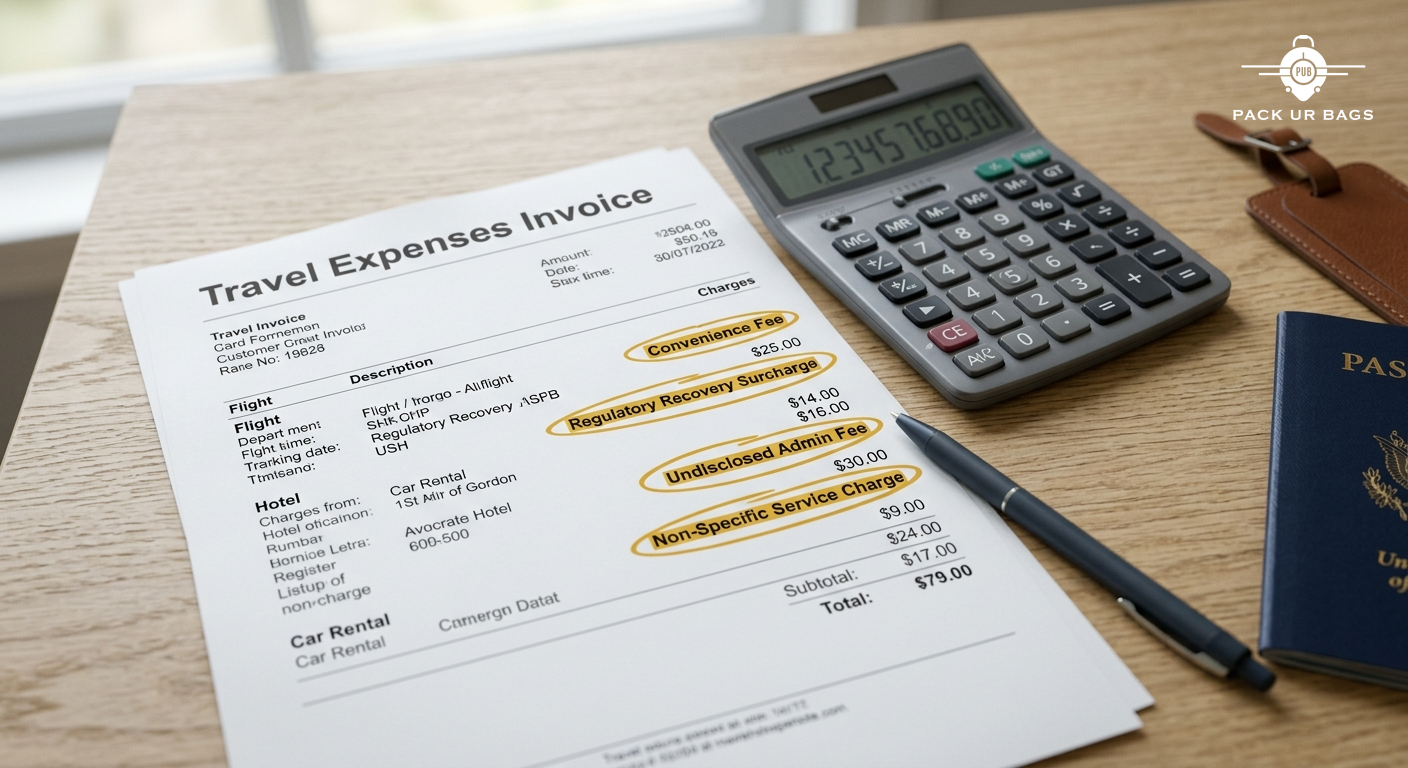
You’ve found the perfect Thailand package. ₹65,000 per person, 6 nights, flights included. You book it, excited. Then the invoice arrives. ₹78,000. What happened?
This happens more often than you’d think. At Pack Ur Bags, we’ve seen couples arrive at our Sarjapur office confused about why their “all-inclusive” international tour packages ended up costing 15-20% more than advertised. The problem isn’t always dishonest operators. Sometimes it’s fine print. Sometimes it’s assumptions. Most of the time, it’s travelers not knowing which questions to ask before they pay.
Here’s what we’ve learned after planning hundreds of international trips for Bangalore travelers: the advertised price is rarely the final price. And the gap between the two? That’s where trust either builds or breaks. This guide walks you through every hidden cost you should check before booking any international tour package, based on real billing surprises we’ve helped clients avoid.
What “Package Cost” Actually Includes and What It Doesn’t
Most travelers assume “package cost” means everything. It doesn’t.
When a tour operator lists a package at ₹60,000, they’re usually covering flights, accommodation, and some meals. Maybe transfers. But visa fees? Travel insurance? Tips? Rarely. We’ve had clients book Europe packages online, only to realize later that the advertised price excluded visas (₹8,000 per person), city taxes in hotels (€3-5 per night), and mandatory travel insurance (₹1,500-2,500). That’s an additional ₹12,000 minimum they didn’t budget for.
The baseline package typically includes return flights from your departure city, hotel stays for the stated nights, breakfast (sometimes), airport-hotel transfers in the destination, and maybe a few sightseeing tours. That’s it. Everything else is an add-on unless explicitly mentioned. Read the inclusion list like a contract, because that’s exactly what it is. If something isn’t listed, assume it costs extra. We tell every client who walks into our J S Complex Sarjapur office the same thing: “If it’s not written in the inclusions, it’s probably not included.”
One Bangalore-based couple booked a Bali package through a large online platform. The cost breakdown looked great until they landed and realized no lunches or dinners were covered, local transport between hotel and tour spots wasn’t included, and entrance fees to temples and parks were out of pocket. They spent an extra ₹18,000 in five days just on meals and tickets. The package wasn’t misleading, technically. They just didn’t read what wasn’t included.
Visa Fees and Processing Charges Tour Operators Often Exclude
Visa costs can punch a hole in your budget if you don’t account for them upfront.
Most international tour packages for destinations like Thailand, Vietnam, Dubai, or Europe exclude visa fees from the advertised price. Why? Because visa costs vary by nationality, processing speed, and sometimes even the consulate you apply through. Operators list them separately to avoid confusion, but that also means travelers miss them while comparing prices. A Thailand visa costs around ₹2,500-3,000 per person. A Schengen visa for Europe? ₹7,000-8,500. UAE visa? ₹4,000-5,000. Singapore? ₹2,000-3,500. Multiply that by your family size and you’re looking at a significant addition.
Then there are processing charges. Some tour operators offer visa assistance as part of the package. Others charge ₹1,000-2,500 per person for handling the paperwork, booking your VFS appointment, and document verification. That’s a legitimate service, but only if you know it’s extra. We’ve had clients surprised by a ₹5,000 processing fee for a family of four that was never mentioned during the sales pitch. At Pack Ur Bags, we break down visa costs and assistance charges in the first quote itself. No surprises.
One thing travelers forget: visa fees are usually non-refundable. If your visa gets rejected or you cancel the trip, you don’t get that money back. Some operators include this risk in their terms. Most don’t explain it clearly. Ask upfront whether visa fees are included, whether processing assistance is extra, and what happens to the fee if you cancel.
Also check for mandatory travel insurance linked to visas. Europe, for example, requires Schengen travel insurance with minimum €30,000 medical coverage. That costs ₹1,500-2,500 per person and is mandatory before your visa is even processed. If the package cost doesn’t mention it, you’re paying it separately.
Flight Upgrades, Seat Selection, and Baggage Allowances Not Covered
The flight might be included. But that doesn’t mean you’ll like the seat you get.
Budget international packages often include economy flights with the cheapest fare class. That usually means no seat selection, no extra baggage, and sometimes a middle seat in the last row. Want to pick your seat? ₹800-2,500 per person per sector. Want extra baggage because you’re shopping in Dubai or Bali? ₹2,000-4,000 for an additional 15kg. Want a meal upgrade or extra legroom? Another ₹1,500-3,000. These aren’t hidden fees in the strictest sense, but they’re also not included in the base package, and most travelers don’t realize it until check-in.
We had a group of four friends book a Malaysia package from Bangalore. The flights were included, but the baggage allowance was 15kg per person with no check-in bag on the return sector. They wanted to bring back electronics and gifts. Adding baggage at the airport cost them ₹12,000 total, which they could’ve gotten for ₹6,000 if they’d added it during booking. They didn’t know to ask.
Some packages include flights but don’t specify the airline or the routing. You might assume a direct Bangalore-Bangkok flight. You might get a layover in Kuala Lumpur with a 6-hour wait. Or a flight that departs at 3 a.m. If flight details aren’t clear in the itinerary, ask for the airline name, flight timings, and layover details before you commit. At Pack Ur Bags, we share live flight options with our clients so they can choose based on timing and convenience, even if it adjusts the package cost slightly.
Seat selection fees have become standard on most airlines. IndiGo, Air Asia, even full-service carriers charge for advance seat selection unless you’re in a premium fare class. If the tour operator hasn’t prepaid for seats, you’ll either pay at check-in or accept whatever the system assigns. For families with kids, that’s a problem. Confirm whether seat selection is included or if you need to pay separately.
Hotel Taxes, Resort Fees, and City Levies That Appear at Check-In
You’ve paid for the hotel. But the hotel still wants more money when you check in.
Many international destinations charge city tax, tourism levy, or resort fees that aren’t included in the room rate. These are government or hotel policies, not operator tricks, but they still catch travelers off guard. In Dubai, most hotels charge a tourism dirham fee of AED 7-20 per room per night (₹150-450). In Maldives, resorts charge a green tax of $6 per person per night (₹500). In Europe, cities like Paris, Rome, and Amsterdam charge €1-7 per person per night as city tax. In the US, resort fees at hotels can run $20-45 per night.
The tour operator can’t always include these in the package cost because they’re collected directly by the hotel at checkout. But a good operator will mention them in the itinerary or terms so you’re not blindsided. A Bangalore family we worked with booked a Maldives package online. At resort check-in, they were told the green tax and service charge added up to $480 for their 4-night stay, payable in cash or card. They had budgeted ₹5,000 for the entire trip’s miscellaneous expenses. That one charge used up half of it.
Ask your operator: “Are there any hotel taxes or resort fees payable directly at the hotel?” If the answer is yes, get an estimate. Some operators include this in their detailed cost sheet. Many don’t. At Pack Ur Bags, we list these charges separately in our quotations under “payable directly” so clients know exactly what to expect when they check in.
Another sneaky one: minibar and phone charges. Some packages include breakfast but the room isn’t fully inclusive. If you drink the bottled water, eat the chips, or make a call from the room phone, you’ll be billed at checkout. These aren’t hidden fees, but they add up fast. One client in Thailand racked up ₹4,500 in minibar charges without realizing the snacks weren’t complimentary. The hotel had a small label on the minibar. They didn’t see it.
Meals Beyond Breakfast and What “All Meals” Really Means
“All meals included” sounds clear. It’s not.
Most budget and mid-range international tour packages include breakfast only. Some include half-board (breakfast + dinner). Very few include full-board (all three meals), and almost none include drinks, snacks, or alcohol unless it’s a resort-specific all-inclusive deal. But the way it’s worded can be confusing. We’ve had clients tell us their package said “meals included,” and when we checked the fine print, it meant breakfast included, lunch and dinner on tour days only, and nothing on free days.
If you’re traveling to a place like Bali or Thailand where meals are cheap, this isn’t a disaster. ₹300-600 per meal per person is manageable. But in Europe or Dubai? A basic lunch costs €10-15 (₹900-1,300). Dinner can run €20-30. For a family of four on a 6-night Europe trip, that’s ₹60,000-80,000 just on food if only breakfast is included. That’s more than some people’s entire package cost.
One couple from Bangalore booked a Switzerland package. The itinerary said “daily breakfast and select meals.” They assumed most meals were covered. Only 4 out of 18 total meals were included. They ended up spending ₹35,000 extra on food, which wrecked their souvenir budget. If they’d known upfront, they could’ve chosen a different package or adjusted their daily spending.
Also check what “breakfast” means. In Asia, it’s usually a buffet with hot options. In Europe, it’s often a continental breakfast—bread, butter, jam, coffee. If you’re used to a full Indian breakfast, you’ll be disappointed, and you might end up buying extra food anyway. Ask what type of meals are included, how many, and on which days. If lunch and dinner aren’t included, budget ₹1,500-2,500 per person per day depending on the destination.
“All-inclusive” packages at resorts are different. They usually cover all meals, snacks, and sometimes alcohol. But check whether premium dining, room service, or specific restaurants are excluded. Some Maldives resorts include buffet meals but charge extra for the overwater restaurant or lobster dishes. Know what you’re actually getting.
Sightseeing Entry Fees, Activity Costs, and Optional Tour Charges
The Eiffel Tower isn’t free. Neither is the Safari. Or the island hopping tour.
Sightseeing is part of every international trip, but entry tickets and activity fees are often excluded from the package cost. A typical Thailand package might include a city tour of Bangkok and a Pattaya coral island trip, but the actual entry tickets to temples, parks, or shows are extra. Same with Europe—your package might include a Paris city tour, but the Eiffel Tower ticket (€20-30), Louvre entry (€17), or Seine river cruise (€15) are add-ons. That’s another ₹4,000-6,000 per person just for major attractions.
We worked with a young professional who booked a Dubai package. It included a desert safari and a city tour. What it didn’t include: the ticket to Burj Khalifa (AED 160), Dubai Aquarium (AED 150), or the dinner upgrade on the safari (AED 80). She ended up paying ₹12,000 extra for experiences she thought were part of the deal. The operator’s itinerary did mention “entry fees extra,” but it was buried in a paragraph of terms. She missed it.
At Pack Ur Bags, we separate included tours from optional add-ons in every itinerary. If a tour is complimentary, we say so. If there’s an entry fee or optional upgrade, we list the cost so clients can decide upfront whether to add it or skip it. That’s how you avoid billing shock on day three of your trip.
Activities like scuba diving, parasailing, zip-lining, snorkeling, or ATV rides are almost never included unless the package specifically says “adventure package with activities.” A Bali package might include a visit to Ubud, but the swing experience, rafting, or waterfall trek are separate bookings. Same with Maldives—resort water sports like jet skiing, diving, or sunset cruises usually cost $50-150 per person. Budget for these separately.
Another trap: “optional tours.” Operators include some tours in the base package and offer others as paid options. That’s fair, but some sales agents push the optional ones hard, making it sound like you’ll miss out if you don’t add them. A Europe package might include 8 cities but offer an optional Swiss Alps day trip for €80 per person. If you don’t want it, don’t pay for it. But know that upfront, not when the tour manager asks for payment on day two.
Travel Insurance, Medical Coverage, and What Happens If You Skip It
Travel insurance feels like an extra. Until something goes wrong.
Most tour operators recommend travel insurance. Few include it in the base price. A standard international travel insurance policy covering medical emergencies, trip cancellation, baggage loss, and flight delays costs ₹1,500-3,500 per person depending on destination and trip length. For a family of four, that’s ₹6,000-14,000. It’s easy to skip when you’re trying to keep costs down. But skipping it is one of the biggest risks you can take on an international trip.
We had a client cancel a Maldives honeymoon package two weeks before departure due to a family emergency. They hadn’t bought travel insurance. The operator’s cancellation policy was strict: 50% refund only if canceled 30 days prior, zero refund within 15 days. They lost ₹1,80,000. If they’d spent ₹5,000 on insurance with trip cancellation coverage, they’d have recovered most of it. That’s a expensive lesson.
Medical emergencies abroad are even scarier without insurance. A couple we know fell sick in Bali and needed hospitalization for food poisoning. Two days in a private hospital cost them $1,200 (₹1,00,000). Their travel insurance covered it entirely. Without insurance, they’d have been stuck negotiating with the hospital and scrambling to arrange funds.
Schengen visas require proof of insurance before approval. So do some UAE packages. If the operator hasn’t included it, you’ll need to buy it separately before applying for the visa. Don’t buy the cheapest policy you find online. Check what’s actually covered—medical expenses up to what limit, whether pre-existing conditions are excluded, whether adventure activities are covered, whether COVID-related issues are included, and what the claim process looks like.
At Pack Ur Bags, we offer travel insurance as an optional add-on with every international package and explain exactly what it covers. We’ve seen enough trip cancellations, medical scares, and baggage delays to know it’s worth every rupee. Treat it as a non-negotiable part of your budget, not an optional luxury.

Airport Transfers, Local Transport, and Inter-City Travel Gaps
Your package includes airport pickup. Does it include everything else?
Most international tour packages include airport-to-hotel transfers on arrival and hotel-to-airport on departure. That’s standard. But what about transport between cities, or from hotel to sightseeing spots, or during free days? That varies wildly. Some packages include a private coach for all tours and transfers. Others include shared transfers only. Some include intercity transfers but not daily local transport.
A Bangalore family booked a multi-city Europe package covering Paris, Switzerland, and Amsterdam. The itinerary mentioned airport transfers and intercity train tickets. What it didn’t include: metro or taxi fare within each city on free days, or transport from hotel to meeting points for optional tours. They spent €200 (₹18,000) on local transport they hadn’t budgeted for. They also didn’t know taxis in Europe are expensive—a 10-minute ride can cost €15-20.
Ask your operator: “Does the package include transport for all sightseeing, or just on specific tour days?” If it’s only on tour days, you’ll need to arrange your own transport on free days. Budget ₹1,000-2,000 per day depending on the destination. Also ask whether transfers are private or shared (shared transfers can mean waiting for other guests), and whether there’s a local SIM or transport pass included. Some smart operators include metro day passes or airport shuttle vouchers. Most don’t.
In Southeast Asia, transport is cheaper. Grab and local taxis in Thailand, Bali, or Vietnam cost ₹100-300 per trip. You can manage. In the Middle East and Europe, every ride adds up fast. At Pack Ur Bags, we include detailed transfer notes in every itinerary so clients know when they’re on their own and when transport is arranged.
Currency Conversion Charges, Foreign Transaction Fees, and Payment Surprises
You paid in rupees. Your bank charged you extra anyway.
If you’re using a credit or debit card abroad, most Indian banks charge a foreign transaction fee of 3-3.5% on every purchase. That applies to meals, shopping, activities, hotel payments, everything. If you spend ₹50,000 during your trip on miscellaneous expenses, you’re paying an extra ₹1,500-1,750 just in bank fees. It’s not the operator’s fault, but it’s a real cost most travelers don’t think about until they see the statement.
Dynamic currency conversion is another trap. When you pay by card abroad, the merchant sometimes asks if you want to pay in rupees or the local currency. Always choose local currency. If you pick rupees, the merchant’s bank does the conversion at a worse rate and you lose 4-6%. We’ve had clients lose ₹3,000-5,000 on a single trip just from bad conversion choices.
ATM withdrawals abroad also carry fees. Your bank charges ₹100-250 per withdrawal, plus a forex markup, plus the foreign ATM might charge its own fee ($3-5). Withdraw larger amounts less frequently, or carry a forex card loaded with the local currency before you leave India. At current rates in 2026, forex cards give better rates than airport currency exchanges and sometimes better than credit cards.
Some tour operators accept payment in installments but add a processing fee for credit card payments—1.5-2.5%. If your package costs ₹2,00,000 and you pay by card, that’s an extra ₹3,000-5,000. Ask if there’s a discount for bank transfer or UPI payment. At Pack Ur Bags, we don’t charge extra for card payments, but we do tell clients upfront how to minimize foreign transaction fees once they’re traveling.
Tipping, Porter Charges, and Service Expectations That Add Up
Tipping isn’t customary in India. It is almost everywhere else.
In most international destinations, tipping tour guides, drivers, hotel staff, and restaurant servers is expected. In the US and Europe, it’s practically mandatory. Restaurant tips run 10-15%. Hotel porters expect €1-2 per bag. Tour guides expect €5-10 per person per day. Drivers expect similar. If you’re not used to it, it feels uncomfortable and adds up fast.
A couple on a 7-day Europe tour with a guide and driver tipped conservatively—€5 per person per day to the guide, €3 per day to the driver, €2 per day to hotel porters. That’s roughly €100 (₹9,000) just in tips. In Dubai, Thailand, and Bali, tipping is less rigid but still appreciated. Budget ₹2,000-5,000 for tips on a typical week-long trip.
Some group tour packages mention “recommended tips” in the itinerary. That’s the operator telling you what the guide and driver will expect. It’s not mandatory, but if you don’t tip and everyone else does, it’s awkward. Ask upfront whether tips are included or expected, and budget accordingly.
Porter charges at airports and hotels are separate. If you have heavy bags and need help, expect to pay ₹100-300 per bag depending on location. In some countries, hotel porters won’t take your bag unless you tip. Plan for it.
Cancellation Fees, Rescheduling Charges, and Refund Fine Print
Life happens. Trips get canceled. That’s when you learn what the refund policy actually says.
Most tour operators have tiered cancellation policies: cancel 45+ days before departure, lose 10-25%. Cancel 30 days before, lose 50%. Cancel within 15 days, lose everything. But the details vary wildly, and if you didn’t read the terms before paying the advance, you’re stuck. We’ve had clients assume they could get a full refund if they canceled a month before travel. The operator’s policy said 50% deduction. They lost ₹60,000.
Airlines and hotels have their own cancellation rules, separate from the operator’s policy. A tour operator might refund part of your payment, but if the airline ticket is non-refundable, that portion is gone. Same with hotel bookings during peak season—many are non-refundable once confirmed. Ask the operator for a full breakdown of what’s refundable and what isn’t at each stage.
Rescheduling isn’t always free either. If you want to change your travel dates, the operator might charge ₹5,000-10,000 as a rescheduling fee, plus any difference in flight or hotel costs due to new dates. If you’re traveling during a festival or holiday period and want to shift dates, expect costs to jump.
At Pack Ur Bags, we explain our cancellation and rescheduling policy during the first conversation, not after booking. We also strongly recommend travel insurance that includes trip cancellation coverage. It’s the only real safety net if your plans change.
Final Cost Transparency and Questions to Ask Before You Pay
You’ve got a quote. Before you pay, ask these questions.
What’s included in this price, specifically? What’s not included? Are visa fees and processing charges extra? Are flight seat selection and baggage included? Are there hotel taxes payable at check-in? How many meals are included—just breakfast, or more? Are entry fees and activity costs included in sightseeing? Is travel insurance part of the package or extra? Are all transfers included, or just airport pickups? What’s the cancellation and refund policy? Are tips expected, and if so, how much?
A transparent operator will answer every one of these clearly and put it in writing. A vague operator will dodge, generalize, or say “we’ll sort it out later.” That’s your red flag. At Pack Ur Bags, we provide a detailed cost breakup with every quotation—what’s included, what’s excluded, what’s payable directly, and what’s optional. No fine print. No surprises on checkout.
Compare packages not just by headline price, but by what’s actually covered. A ₹70,000 package that includes visa, insurance, all transfers, and most meals might be better value than a ₹60,000 package that excludes all of those. Add up the real total cost before deciding. And if something in the itinerary or invoice isn’t clear, ask. A good operator won’t mind explaining. A bad one will rush you to pay.
Frequently Asked Questions
Are visa fees usually included in international tour package prices?
No. Most operators exclude visa fees and list them separately because they vary by nationality and processing type. Expect to pay ₹2,000-8,500 per person depending on destination, plus processing charges if the operator handles applications.
How much should I budget for meals if only breakfast is included?
Budget ₹1,500-2,500 per person per day for lunch and dinner in most international destinations. In Southeast Asia it’s lower (₹800-1,200), in Europe and the Middle East it’s higher (₹2,000-3,000).
Do I really need travel insurance for an international trip?
Yes. It covers medical emergencies, trip cancellations, baggage loss, and flight delays. A policy costs ₹1,500-3,500 per person and can save you lakhs if something goes wrong. Many visas require it anyway.
What happens to my money if I cancel the trip?
It depends on the operator’s cancellation policy and how close to departure you cancel. Most policies deduct 10-100% depending on timing. Always read the cancellation terms before paying the advance and consider trip cancellation insurance.
Let’s Build You a Transparent, Honest Travel Plan
You shouldn’t have to guess what you’re actually paying for. Every international trip should come with a clear cost breakdown, honest inclusions, and no surprises at checkout. That’s how we work at Pack Ur Bags. We’ve helped hundreds of Bangalore travelers plan international holidays where the final bill matches the first quote, because we list everything upfront—visa costs, taxes, exclusions, optional add-ons, the lot.
If you’re planning an international trip and want to know exactly what you’re paying for before you commit, call us at +91-9150017657 or visit our office at J S Complex, Sarjapur. We’ll walk you through a detailed quotation, explain every line item, and help you budget realistically so your trip stays stress-free from booking to landing. No hidden fees. No billing shocks. Just honest, transparent travel planning.